News
LandScale workshop in Abuja: Advancing soil health across the Sahel
The LandScale Workshop in Abuja brought together experts and partners from across the Sahel to strengthen the use of LandScale as a monitoring and evaluation tool for the Soil Values Programme. Over three days, participants refined landscape metrics, validated data sources, and built a shared roadmap to improve soil health and agricultural productivity across five landscapes in Burkina Faso, Mali, Niger, and Nigeria, advancing sustainable livelihoods for millions of farmers in the region.
Setting the Stage for Regional Collaboration on Soil Health
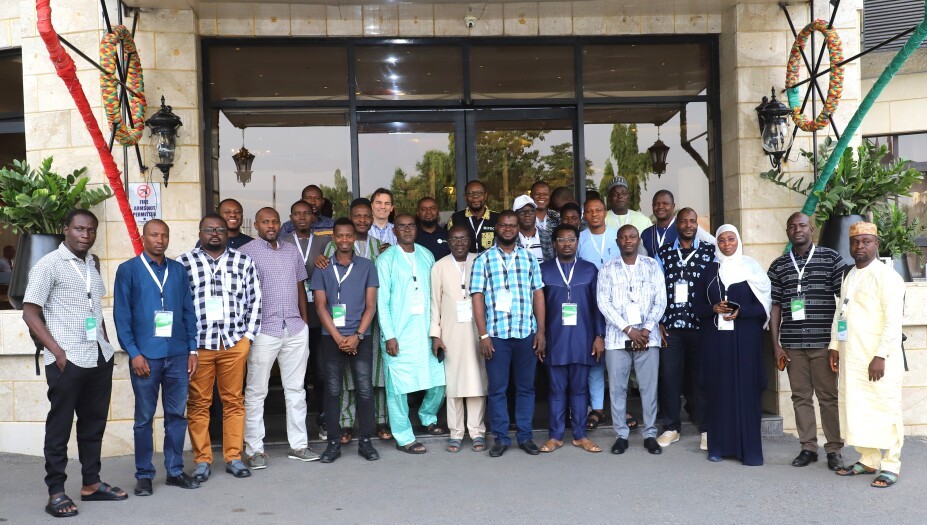
From December 8-10, the Bolton Hotel in Abuja served as the hub for a critical LandScale Workshop, organized by SNV (Soil Values Programme) and the Rainforest Alliance. This three-day event united experts, field teams, and knowledge partners from across the Sahel region with a singular focus: refining the use of LandScale. This advanced monitoring and evaluation tool is set to play a pivotal role in enhancing soil fertility and agricultural productivity across five key landscapes in Burkina Faso, Mali, Niger, and Nigeria.
Context and Purpose
This workshop operates under the umbrella of the Soil Values Programme, a project funded by the Netherlands Directorate-General for International Cooperation (DGIS). The initiative carries an ambitious goal: improving the productive capacity of 2 million hectares of farmland to benefit 1.5 million farmers, particularly women, throughout the Sahel.
Central to this mission is LandScale. Relaunched in mid-2025, the refreshed platform offers a streamlined, user-friendly framework for monitoring landscape initiatives. It breaks the assessment process down into three clear steps:
- Platform registration and setup.
- Metric selection and data sourcing.
- Metric assessment.
While SNV teams had previously undergone online training, this in-person workshop provided the necessary support to finalize landscape profiles and ensure the metrics are ready for real-world application.
Workshop Goals and Objectives
The primary aim was to ensure LandScale is effectively utilized as the monitoring and evaluation engine for the Soil Values Programme. Specific objectives included:
- Refresher Training: Updating LandScale Assessment Teams and Knowledge Partners on the latest platform features.
- Profiling & Registration: Completing the setup and assessments for the five target landscapes.
- Validation: Confirming the assessment parameters with direct input from Knowledge Partners.
Highlights from the Workshop
Day 1: Foundations and Training
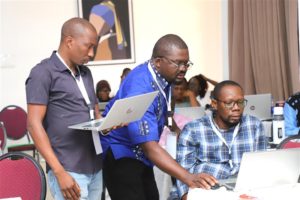
The event opened with a welcome address from the SNV Team Leader and an official launch by the SNV Country Director. Following introductions of participants from Mali, Burkina Faso, Niger, and Nigeria, the focus shifted to the LandScale approach. Attendees participated in demonstrations of platform functionalities and guided exercises to select indicators aligned with the Soil Values Programme’s specific needs.
Day 2: Collaborative Group Work
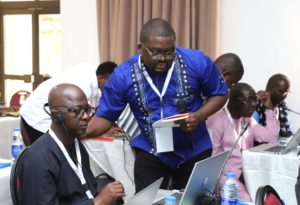
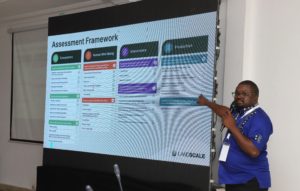
Collaboration was the theme of the second day. Participants divided into groups based on LandScale’s four pillars – Ecosystems, Human Well-being, Governance, and Production – to review and refine metrics. Country-specific teams then proposed new indicators, verified data sources, and integrated existing data from SNV projects. Cross-group presentations ensured alignment and harmonization across all landscapes.
Day 3: Finalization and Roadmap Development
The final day focused on refining analyses and engaging Knowledge Partners via an online session. Each country group presented its metrics for feedback on expectations and best practices. The workshop concluded with the co-production of a roadmap designed to finalize the evaluation process by February 13, 2026.
Key Outcomes and Recommendations
The workshop successfully achieved several critical milestones:
- Team Readiness: Teams are now fully trained on the LandScale platform with clarified roles and responsibilities.
- Metric Refinement: Indicators and performance metrics have been refined by pillar and landscape.
- Data Mapping: Data sources are mapped, and gaps are identified for consolidation.
- Strategic Planning: A detailed roadmap is in place to complete assessments and validate results.
Moving forward, recommendations include adopting a participatory approach to finalize core indicators, harmonizing data practices with standardized templates, and ensuring early integration of Knowledge Partners into the platform.
Looking Ahead
The LandScale Workshop in Abuja marks a significant leap forward for the Soil Values Programme. With a clear roadmap and strengthened collaboration among stakeholders, the initiative is well-positioned to achieve its goals of fostering sustainable development and improved livelihoods for millions of farmers across the Sahel region.