News
When the project ends, the real work begins
How can landscape initiatives sustain their impact after project funding ends? In Kenya's Mount Kenya landscape, the answer lies in building local ownership. At the close of the MSuLLI programme, LandScale supported the transition to locally led landscape monitoring by strengthening the capacity of the Mount Kenya Landscape Management Board. This story explores how investing in local institutions, trusted data, and collaborative governance is helping ensure that landscape progress continues long after the project has ended.
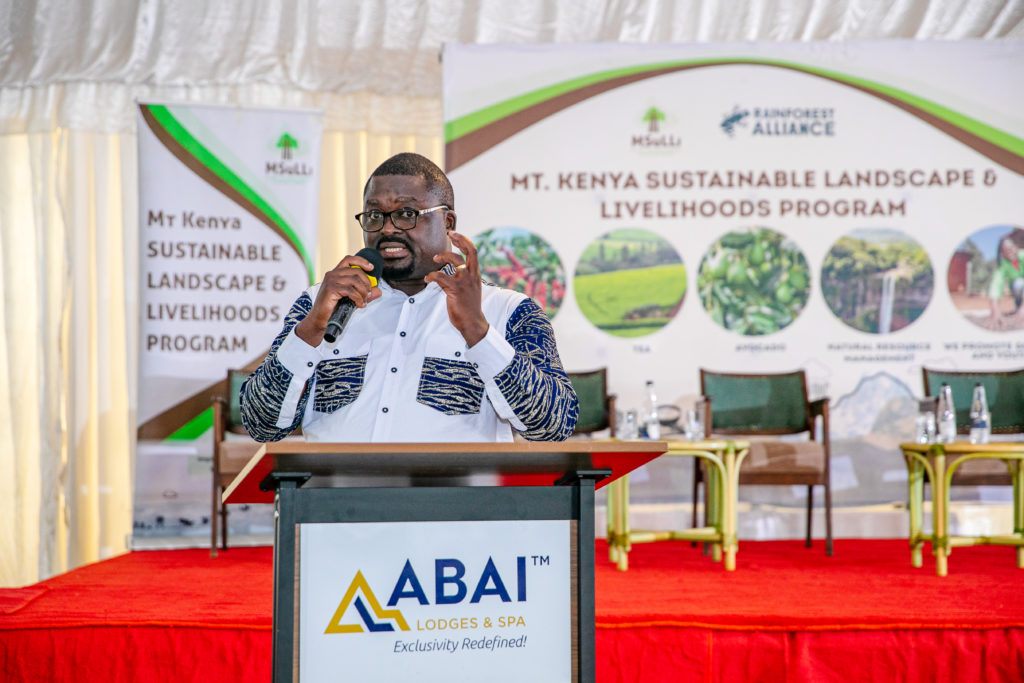
How local ownership is helping secure the future of sustainable landscape management in Kenya's Mount Kenya landscape
What happens to a landscape initiative after a project ends?
That question took centre stage during the Mount Kenya Sustainable Landscape and Livelihoods Initiative (MSuLLI) End-of-Project Learning Workshop, where farmers, government agencies, businesses, researchers, civil society organizations, and development partners came together to reflect on the programme’s achievements and discuss how its impact can be sustained well beyond the project’s lifetime.
Representing LandScale, Senior Program Associate for Africa Liboum Mbonayem participated in the workshop with a clear objective: to help ensure that the progress made under the programme would not end when project funding did.
One message resonated throughout the discussions: lasting landscape transformation depends on strong local institutions that have the knowledge, tools, and evidence to continue driving change.
That principle shaped LandScale’s contribution to the workshop.
A dedicated capacity-building session equipped members of the Mount Kenya Landscape Management Board (LMB), the institution that will now oversee landscape monitoring and governance, with the skills to independently manage the LandScale framework. Beyond learning how the platform works, participants explored how credible landscape data can strengthen governance, inform better decisions, improve accountability, communicate impact, and attract future partners and investment. As the programme closes, this transfer of knowledge ensures that responsibility for monitoring landscape performance remains where it belongs, with the people who know the landscape best.
Building a foundation for lasting impact
The workshop also offered an opportunity to reflect on the broader achievements of MSuLLI, a multi-year initiative led by the Rainforest Alliance with support from the IKEA Foundation to strengthen one of Kenya’s most important agricultural and ecological landscapes.
Unlike traditional development projects that focus on individual farms or commodities, MSuLLI adopted a landscape approach—bringing together communities, producer organizations, government agencies, businesses, researchers, and civil society to tackle shared environmental and livelihood challenges.
Throughout the programme, LandScale served as a common framework for measuring landscape performance across environmental, social, governance, and production outcomes. Working alongside the Landscape Initiative Maturity (LIM) framework, it helped stakeholders move beyond fragmented project reporting by creating a shared evidence base for decision-making, strengthening multi-stakeholder governance, and improving the initiative’s readiness to sustain collective action over the long term.
The programme’s impact was evident during field visits across the Mount Kenya landscape. Coffee cooperatives demonstrated how improved governance and local processing are helping farmers capture greater value from their produce. Tea producers showcased investments in nurseries, improved planting materials, and livelihood diversification through avocado production. Farmers shared how climate-smart agriculture, regenerative practices, and integrated dairy and coffee systems are improving productivity, restoring soil health, and strengthening household resilience.
The visits also served as a reminder that challenges remain. Climate variability, rising production costs, ageing plantations, and limited investment continue to affect farming communities, reinforcing the importance of coordinated landscape action supported by trusted evidence.
A new chapter for the Mount Kenya landscape
Perhaps the workshop’s greatest achievement was not celebrating what had already been accomplished—it was preparing for what comes next.
As MSuLLI concludes, the Mount Kenya Landscape Management Board is stepping into a leadership role, equipped to steward landscape monitoring, coordinate stakeholders, and use evidence to guide future decisions. To support this transition, LandScale will continue providing targeted coaching to members of the Board’s Technical Secretariat as they strengthen their capacity to manage assessments, update Landscape Initiative Maturity evaluations, and communicate landscape performance independently.
This transition reflects a core belief behind the LandScale approach: landscape assessments should not end as reports on a shelf. They should become living tools that help stakeholders learn, adapt, demonstrate progress, and unlock new opportunities for investment and collaboration.
The Mount Kenya experience shows that the true legacy of a landscape programme is not measured by the activities completed during its lifetime, but by the capacity it leaves behind. When local institutions have trusted evidence, strong partnerships, and the confidence to lead, they are better equipped to sustain progress long after external support has ended.
That is what lasting impact looks like.